Bayeux Around Britain
The Bayeux story beyond London, from Hastings and Lincoln to Edinburgh, Exeter, Plymouth and Somerset
A National Moment, Not Just a London One
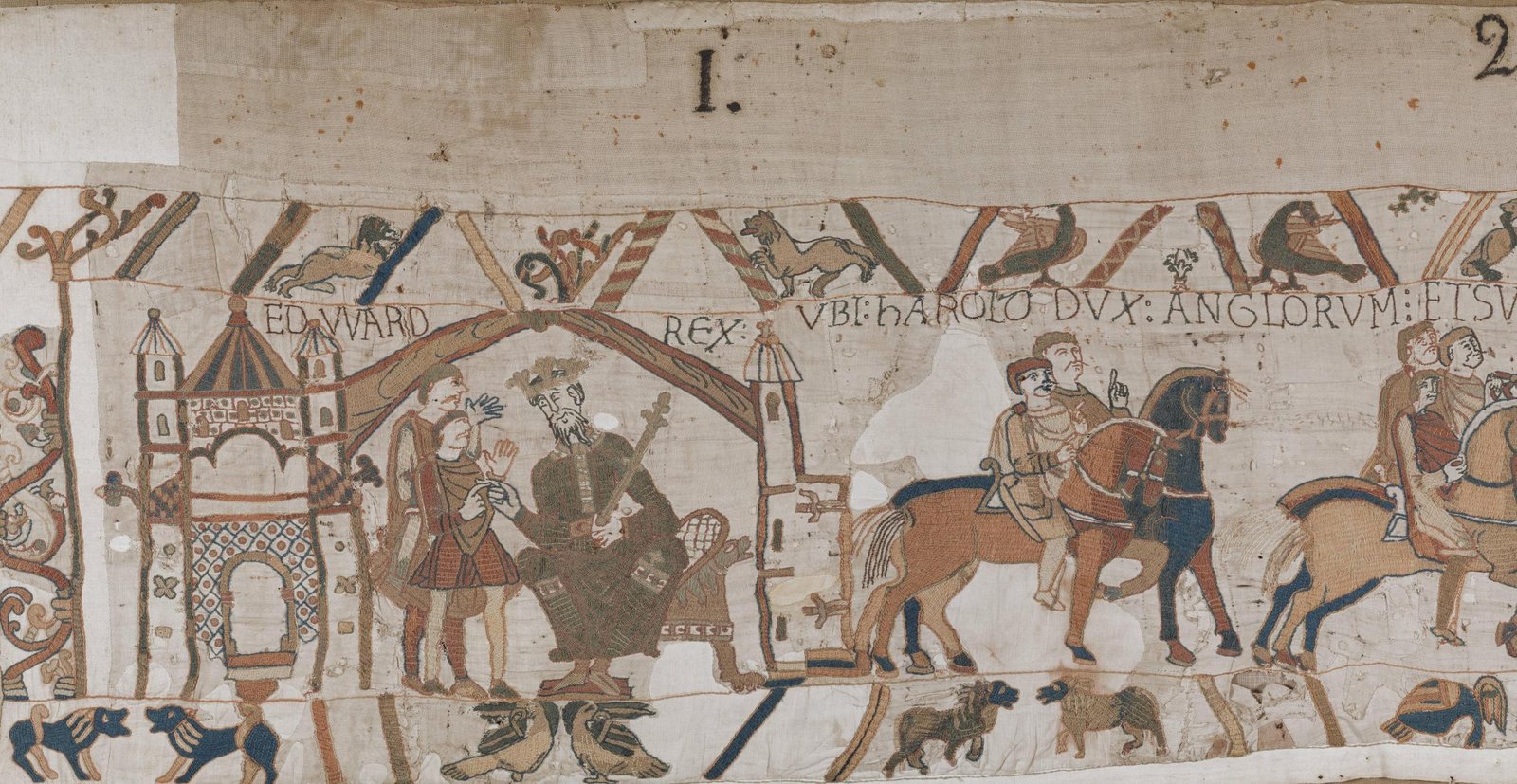
Bayeux Around Britain is the British Museum's UK-wide programme built around the historic loan of the Bayeux Tapestry. By early September 2026, more than 70 partner organisations across all four UK nations had joined, including museums, galleries, libraries, archives, cathedrals, castles and heritage sites.
The programme is designed so that Bayeux Tapestry-related activity reaches far beyond London. One of its stated ambitions is to place activity within roughly an hour's drive of about two-thirds of the country, while digital material and school programming extend the reach further still.
Programme information checked: 24 September 2026.
This page keeps dated activities after they finish so it remains a permanent record of Bayeux Around Britain. An event is not removed simply because its date has passed. The page only needs updating when new activity or important programme details are announced.
Summer 2026
20 June 2026 · Chew Magna, SomersetEvery Coin Tells a Story
The Chew Valley Hoard provides one of the strongest links between Bayeux Around Britain and the real upheaval that followed the Conquest. The hoard contains 2,584 silver pennies dating from about 1066 to 1068 and is the largest coin hoard known from the immediate aftermath of the Norman Conquest. The Treasure Valuation Committee valued it at £4.3 million.
The coin count makes the political transition visible. There are 1,240 coins of Harold II and 1,343 of William I, together with one mule coin associated with Edward the Confessor. William's coins include examples of his first coinage type, issued soon after his coronation on Christmas Day 1066. The hoard was probably buried for safekeeping during the instability of 1067–68, when rebellion and resistance affected the South West.
Every Coin Tells a Story was a free family day in Chew Magna that gave local audiences an early chance to encounter the hoard. The programme included real coins from the hoard alongside family activities, storytelling, music, screen printing and a treasure trail, making the event much more than a conventional display case exhibition.
1 July 2026 · British Museum, LondonPublic Booking Opened
Public booking for the British Museum's Bayeux Tapestry exhibition opened on 1 July 2026 for dates between September and December 2026. The ticket release was an important milestone in the wider programme because the London exhibition is the central event around which the national activity was developed.
26 August 2026 – 26 August 2028 · Lincoln CastleHastings the Dragon
Lincoln Castle's contribution is deliberately playful but rooted in Norman history. A giant dragon named Hastings joined the castle's existing dragons and was installed near Lucy Tower, on the site of William the Conqueror's original Norman motte-and-bailey castle.
The dragon is inspired by the strange and fantastical creatures that appear in the borders of the Bayeux Tapestry. Lincoln Castle makes a particularly suitable setting because William ordered a castle to be built there in 1068 as part of the Norman effort to secure the newly conquered kingdom. The display therefore links the story of Hastings with what happened next as Norman power spread across England.
28 August 2026 – 28 February 2027 · HastingsNorman Heritage Banner Trail
A Norman-inspired banner trail runs from Hastings railway station towards Hastings Castle. The banners were designed through local participation, with residents, community groups and organisations contributing designs. The route extends the 1066 story beyond museum walls and into the town itself, giving visitors a visible trail through a place whose identity remains inseparable from the Norman Conquest.
29 August – 1 November 2026 · Hastings Town HallThe Hastings Embroidery
The Hastings Embroidery returns to public display as part of the wider Year of the Normans activity around the Bayeux programme. Created in 1966 for the 900th anniversary of the Battle of Hastings, the work continues the idea of telling national history through stitched images.
Its panels carry the story forward from 1066 through nine centuries of English life, depicting rulers, explorers, inventions and episodes from later history. Displaying it while the Bayeux Tapestry is in Britain creates a direct conversation between a medieval embroidered narrative and a modern commemorative response made nine hundred years later.
Autumn 2026
10 September 2026 – 11 July 2027 · British Museum, LondonThe Bayeux Tapestry Exhibition
The Bayeux Tapestry, presented by Igor Tulchinsky, is the centrepiece of the entire programme. The original embroidery is displayed in the British Museum's Sainsbury Exhibitions Gallery, Room 30, from 10 September 2026 to 11 July 2027.
The loan is historic because it brings the Bayeux Tapestry to Britain for the first time since it was made nearly a thousand years ago. Bayeux Around Britain was designed to make sure that this exceptional London exhibition became a national event rather than something accessible only to people able to visit Bloomsbury.
10 September – 8 November 2026 · Hastings Museum & Art GalleryThe Stothard Casts
Hastings is the first stop for a British Museum Spotlight Loan of three hand-painted plaster casts connected directly with the Bayeux Tapestry. Artist and antiquarian Charles Alfred Stothard made wax impressions from the surface of the original embroidery in 1816; the surviving plaster casts were produced from those impressions and preserve details of Harold II, William of Normandy and other figures.
That direct physical relationship with the Tapestry makes them unusually valuable. They are not simply later copies drawn by eye. The impressions were taken from the surface of the original textile itself, preserving information about texture and appearance before later restoration altered some areas.
Hastings is the first of six UK venues on the casts' national tour. Replica material accompanies the display so that schools and community groups can explore the story in a more hands-on way.
12 September 2026 · Hastings CastleBeyond the Bayeux
Hastings Castle hosted Beyond the Bayeux, combining music, theatre and projections to bring the Norman site to life. Rather than treating the Tapestry only as an object to be studied, the event used performance and projected imagery to reconnect the story with the landscape and fortifications of Hastings itself.
15 September 2026 – 11 July 2027 · RAMM, ExeterBayeux Around Britain at RAMM
The Royal Albert Memorial Museum & Art Gallery in Exeter uses its own collections alongside British Museum digital material to tell a local version of the Conquest story. The display includes coins minted in Exeter showing Edward the Confessor, Harold II and William I, Saxon and Norman pottery, and fragments connected with the new architecture introduced after the Conquest.
One especially revealing strand is pottery made by a French potter who was already living in Exeter before 1066, a reminder that connections across the Channel did not begin with William's invasion. A digital trail through the galleries expands the display beyond one case or room.
17 September 2026 · Dovecot Studios, EdinburghWhen Is a Tapestry Not a Tapestry?
Dovecot Studios used the Bayeux programme to explore a basic but important question: the Bayeux Tapestry is not technically a tapestry at all, but an embroidery. Its team of apprentices and volunteers produced details inspired by the original, one woven and one embroidered, allowing visitors to compare the techniques directly.
The talk examined the distinction between tapestry weaving and embroidery and used Dovecot's own textile expertise to explore how highly skilled craft knowledge is passed from one generation to another.
14 October 2026 · UK-wide schools broadcastThe National History Lesson
On the 960th anniversary of the Battle of Hastings, a national digital history lesson links classrooms around the country. The broadcast is delivered by the British Museum with the British Library, English Heritage and Norwich Museum Service.
The session is aimed at school pupils who may never be able to visit the London exhibition. It uses the Tapestry to explore history, storytelling, perspective and interpretation, and forms part of the wider attempt to make the exhibition accessible to children throughout the UK rather than only those able to travel to the Museum.
17 October 2026 · Hastings Museum & Art GalleryBayeux Film Trail
Hastings Museum adds a trail of short Bayeux Tapestry films through its galleries. The films are paired with objects from the museum's own collection and high-resolution images of the embroidery. A longer film in the museum's Durbar Hall provides a more detailed introduction to the Tapestry, its creation and its historical setting.
The trail broadens the Hastings programme beyond the Stothard casts, allowing visitors to approach the Tapestry through moving image, local collections and the town's own connection with 1066.
22 October 2026 – 11 July 2027 · Tewkesbury AbbeyFrom Conquest to Kingdom
Tewkesbury Abbey hosts one of the most atmospheric Bayeux Around Britain displays: a full-scale 70-metre printed reproduction of the entire Tapestry set inside one of Britain's great surviving Norman churches.
From Conquest to Kingdom goes beyond the Battle of Hastings itself. A Norman heritage trail explores the kingdom that followed, including figures such as Queen Matilda and local patron Robert Fitzhamon, and looks at architecture, craftsmanship, religion, power and everyday life.
The setting matters. Visitors encounter the embroidered story beneath genuine Romanesque architecture created by the same broader Norman culture that transformed England after 1066.
Late 2026
10–19 November 2026 · STEAM Museum, SwindonFull-Scale Printed Bayeux Tapestry
STEAM Museum displays a full-scale printed reproduction of the Bayeux Tapestry, accompanied by an information film and interpretation material. At roughly 70 metres long, the reproduction gives visitors an immediate sense of the object's extraordinary scale and allows close inspection in a way that is difficult to appreciate from photographs in books.
The display is presented as a stand-alone Bayeux Around Britain event, so visitors do not need to book general admission to the railway museum simply to attend the Tapestry display.
21 November 2026 – 9 April 2027 · Dovecot Studios, EdinburghBayeux on the Balcony
Dovecot Studios unrolls a full-size printed Bayeux Tapestry across its Balcony Gallery, giving Scottish audiences the chance to experience the immense scale of the original narrative. British Museum interpretation is combined with commentary from Dovecot's professional weavers and community embroiderers.
The emphasis is not only historical. Dovecot uses the display to compare medieval textile storytelling with modern tapestry and embroidery, asking what the Bayeux Tapestry means to makers working with thread almost a thousand years later. The wider Dovecot Bayeux programme also includes talks, workshops and community engagement projects.
21 November 2026 – 3 May 2027 · North Lincolnshire Museum, ScunthorpeLarge-Scale Bayeux Projections
North Lincolnshire Museum uses large-scale projections to bring details of the Tapestry into view at a size far larger than the original embroidery. The projected scenes are displayed alongside Norman material from the museum's own collections, linking digital enlargement with genuine objects from the period.
The format is particularly useful for details that can be difficult to see in the original: armour, gesture, horse equipment, buildings and small figures can all be studied at a dramatically enlarged scale.
Early 2027
January – March 2027 · Roman Baths Museum, BathThe Chew Valley Hoard Returns to the South West
Coins from the Chew Valley Hoard travel to the Roman Baths Museum for the first substantial South West touring display. The location brings the hoard back close to the region in which it was buried and discovered.
The display continues the story begun at Chew Magna, allowing a much wider audience to see material from a find that records the transfer of royal power from Harold to William in silver pennies.
13 February – 11 April 2027 · The Box, PlymouthBayeux, Battles and Making History
The Box, winner of Art Fund Museum of the Year 2026, presents what it describes as the largest public digital screening of the Bayeux Tapestry anywhere in the country. Specially developed digital material allows visitors to inspect the embroidery in close detail at a much larger scale.
The exhibition sets 1066 beside another history-defining conflict: the Battle of the Somme. Fourteen paintings by Westcountry artist and First World War veteran Robert Borlase Smart are shown together, creating a conversation about how societies record, remember and retell war.
The Box also creates a major engagement space for schools, families and community groups, with hands-on workshops, creative activities and storytelling projects. Visitors are invited to think about who creates history, whose stories survive and how personal memories become part of a wider historical record.
Spring 2027
March – May 2027 · Rievaulx Abbey, North YorkshireThe Stothard Casts Continue Their Tour
The three hand-painted Stothard casts travel north to English Heritage's Rievaulx Abbey. The abbey is the only northern venue announced for this part of the Spotlight Loan tour.
Displaying these 19th-century casts in one of England's great medieval monastic ruins adds another layer to the programme: an early attempt to record the Bayeux Tapestry is shown inside a site that itself embodies the medieval world transformed by the Norman period.
From spring 2027 · Museum of Somerset, TauntonThe Chew Valley Hoard Exhibition
A substantial temporary exhibition at the Museum of Somerset develops the story of the Chew Valley Hoard in the county where it was found. Museum planning material indicates an April 2027 opening for the temporary exhibition, while the wider public programme is described as beginning in spring.
This is not yet the hoard's final permanent installation. The temporary exhibition forms part of a larger two-year engagement project involving events, activities, learning and community participation.
Autumn 2026 – July 2027 · Galashiels, Scottish BordersTwo Nations; Two Tapestries
The Great Tapestry of Scotland Visitor Centre uses the Bayeux programme to compare two enormous stitched narratives separated by almost a thousand years. The Great Tapestry of Scotland itself runs to roughly 143 metres and was stitched by around 1,000 volunteers, making it more than twice the length of the Bayeux Tapestry.
The programme, titled Two Nations; Two Tapestries, explores the direct influence of the Bayeux Tapestry on artist Andrew Crummy when the Great Tapestry of Scotland was developed. Printed Bayeux imagery, interactive interpretation, talks, workshops and educational activity allow visitors to compare how two societies have used stitch to tell national stories.
The Stothard casts are also due to appear at the Galashiels centre during 2027, making it the only Scottish venue announced for that rare loan. Exact cast dates are still to be confirmed.
Longer Programme
2026–2027 · Carrickfergus Museum, Northern IrelandA Different Norman Story
Carrickfergus Museum takes the Norman story beyond England. Its Bayeux Around Britain contribution focuses on the arrival of Anglo-Norman forces in Ireland in 1169 and the profound political and social changes that followed.
The approach is useful because it prevents 1066 from being treated as an isolated event. Norman expansion continued across the British Isles, and the Carrickfergus programme places the conquest of England within that much longer story.
Spring / summer 2027 · NationwideCelebration of Craft
A national celebration of making and craft forms part of the later Bayeux Around Britain programme. The emphasis shifts from looking at the Tapestry to thinking about how such work is physically made: thread by thread, by skilled hands, through time-consuming collective labour.
That makes craft an especially appropriate way to close the national programme. The Bayeux Tapestry survives not simply because of the story it tells, but because of the extraordinary textile skill embodied in the object itself.
Spring 2028 · Museum of Somerset, TauntonThe Hoard's Permanent Gallery
The Chew Valley Hoard story continues beyond the main Bayeux Around Britain exhibition period. In spring 2028, a new permanent gallery is planned at the Museum of Somerset, displaying all 2,584 coins together.
This matters because the spring 2027 Taunton exhibition is not the end of the project. The permanent gallery is the long-term home of the complete hoard and the culmination of the acquisition, conservation and public engagement programme.
Partner Grants and Digital Access
The national programme also includes support that visitors may never see directly. Partner organisations have been offered help with audiovisual equipment so that smaller museums and heritage venues can make effective use of the British Museum's digital Bayeux material.
That infrastructure is important. Bayeux Around Britain is not simply a collection of travelling objects. Much of its reach comes through high-resolution digital interpretation, film, projection and school resources that allow places without major exhibition budgets to participate.
Compare the British Museum exhibition companion, scene-by-scene guides and wider studies of the Bayeux Tapestry before or after seeing the national programme.
Browse Bayeux Tapestry Books →Programme Sources
This page was checked against current information from the British Museum, UK Government, South West Heritage Trust, Hastings Borough Council, Lincoln Castle, RAMM Exeter, Dovecot Studios, STEAM Museum, VisitEngland, English Heritage, The Box Plymouth, Tewkesbury visitor information and the Great Tapestry of Scotland. Where a partner has not yet published exact dates, the wording above avoids inventing them.
Continue exploring
The national programme works best when it is connected back to the original embroidery, the events of 1066 and the chance to see the Tapestry itself.
Visit the Tapestry
Prepare for the British Museum exhibition and make the most of your viewing time.
Plan your visit →Timeline of 1066
Follow the political and military events behind the national programme.
Open the timeline →Explore all 58 scenes
Follow the embroidered narrative from Edward and Harold to Hastings.
Open the scene guide →